My grandmother Mary Cady Priddy was a saint. She passed away on December 22, 2014, two days before what would have been her 90th birthday. Although quiet and humble, she was a fiercely intelligent, compassionate woman who lived a full and interesting life.
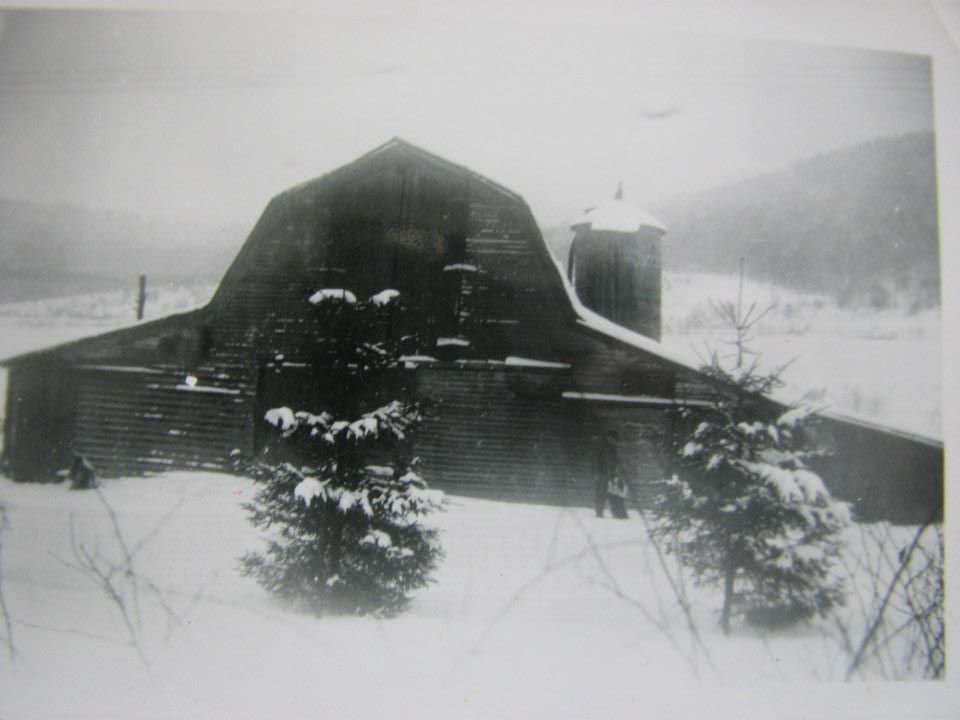
She spent her childhood climbing trees, playing with the cows, and stomping in the creek behind this dairy farm in Richburg, NY. I went there once as a young man of maybe 13 or 14, to visit the family and friends that still lived there. Richburg’s people are the salt of the earth. They work hard, smile wide, and look out for each other. Hardships are endured through faith in God, and their emphasis on education and connection to the natural world is a source of true wisdom. Life feels very different there, elemental: wood, metal, glass, and snow everywhere, always with the snow, blowing around and stinging you. It feels like a step into the world of John Steinbeck and Robert Frost, that defining epoch of American history, one that I think with some sadness that we have moved too far beyond. Mary grew up in a time when virtue, faith, and community were real words that had sanctity.
She attended business school in Ohio. Her own writing from her early life indicates that she was incredibly bright, adventurous, and self-aware. She knew what she liked- traveling, reading, helping other people- and she built a life of her interests. To her, being alive was as plain as that.
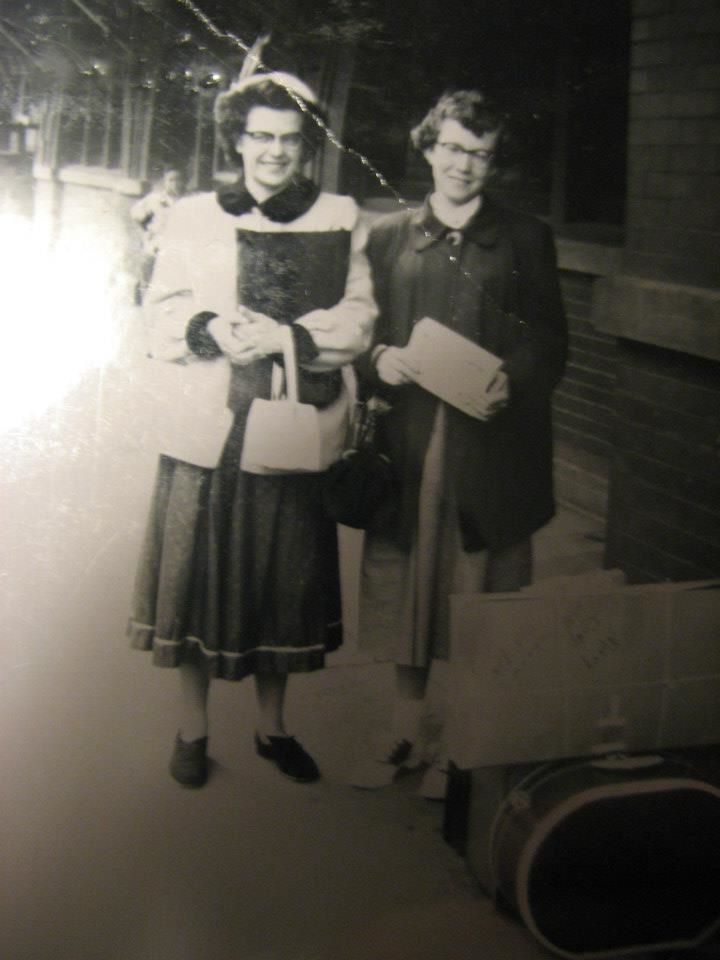
This is a photo of her in New York City, with her cousin Betty. The giddy expression on her face which I so love is a little uncharacteristic.
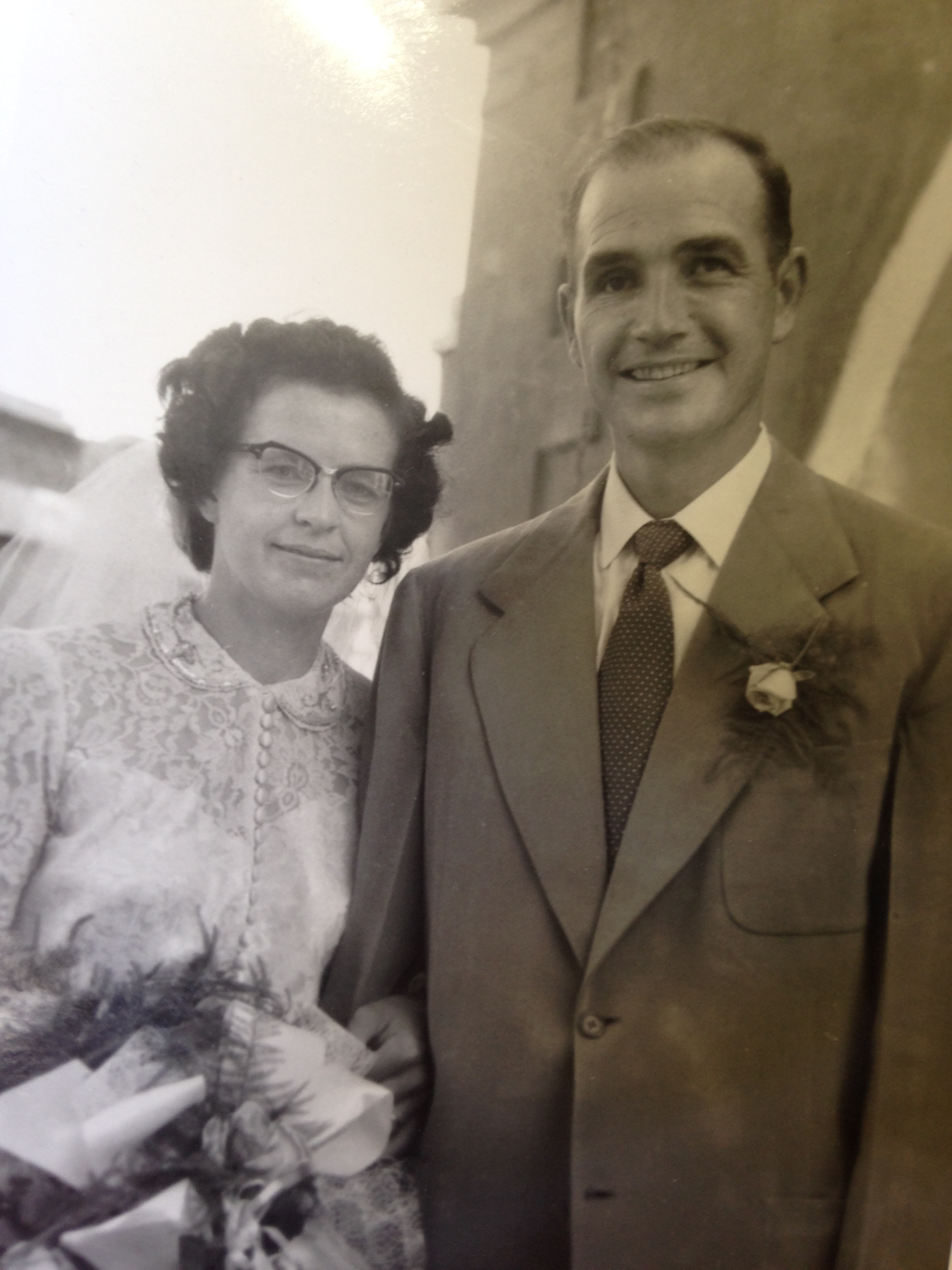
When she was 24 years old, she left America to pursue missionary work in Lahore, Pakistan. Lahore is the capital city of the Punjab region of northeastern Pakistan, and had a population of around 800,000 in the late 1940’s when she moved there. Although my brother, many of my cousins, and I have moved to bigger cities for work or education, in Mary’s case, there’s the unthinkable degree of complexity that comes with a non-Western culture and language. Although she benefited from the resources of the Christian Mission, I am eternally awed and impressed by her willingness to take on this challenge as an unmarried woman of the WWII era. It was there that Mary met Clyde Orville Priddy, a fellow Christian thought leader, and they were wed in Lahore before meeting each others’ families.
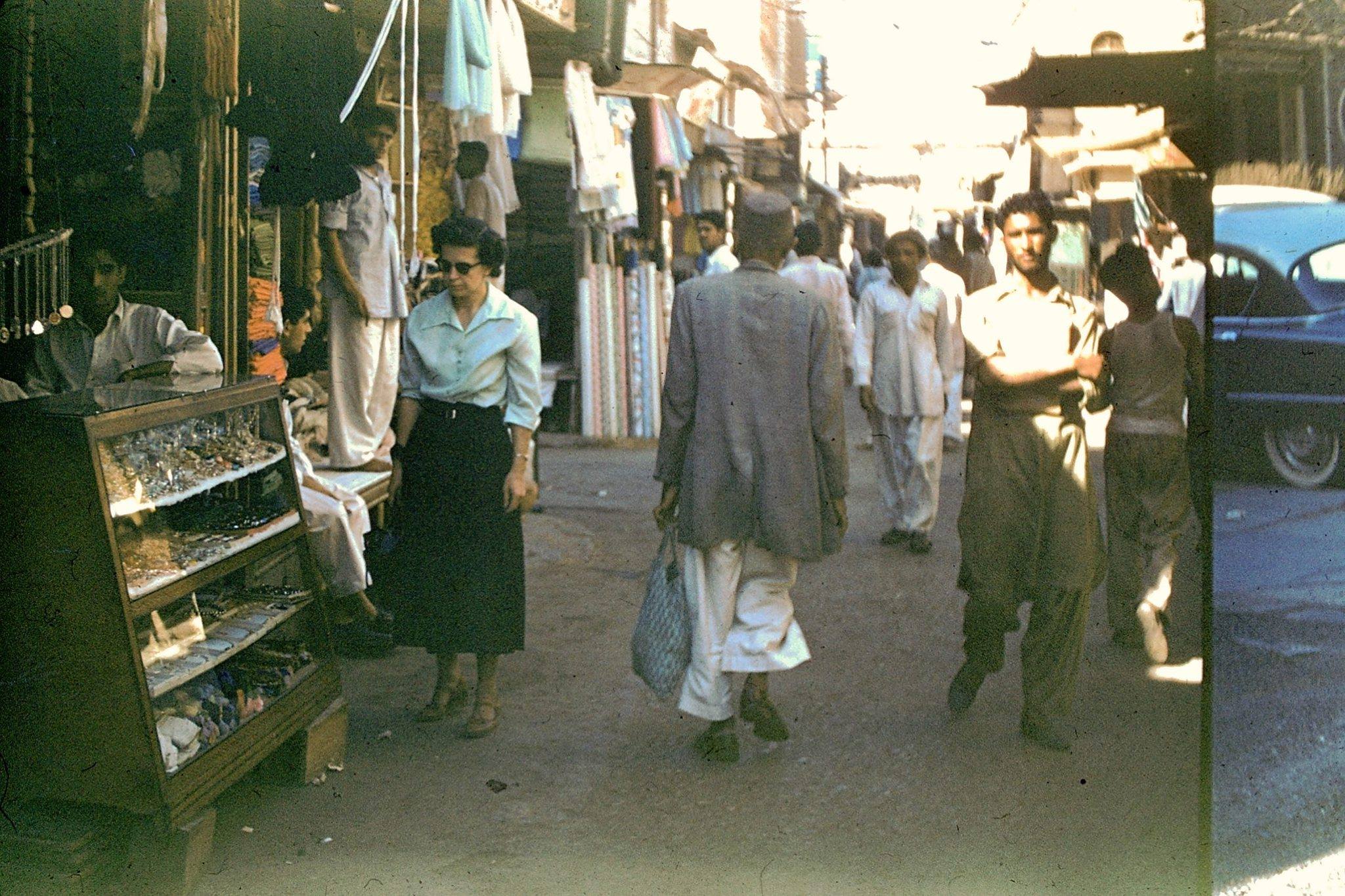
This is one of my favorite photos of her, looking svelte, defiant, and fascinated with the world, walking through a market.
This was probably taken by my grandfather. I feel very fortunate that he was a talented photographer, and that he kept for so long the boxes and boxes of slide images from their time in Pakistan. Aside from Mary and his children, he took pictures of the local people, the mosques, and the markets. Their passion for the world is what I most admire about them both. I see it in all of his photographs, and read it in her letters.
During their time in Pakistan, Clyde and Mary were well known for providing messages of faith in English and Urdu. Clyde’s most famous work was the translation of the story of David and Goliath to the native language. They were blessed with three children in Pakistan, Philip, Isabelle, and Grace.
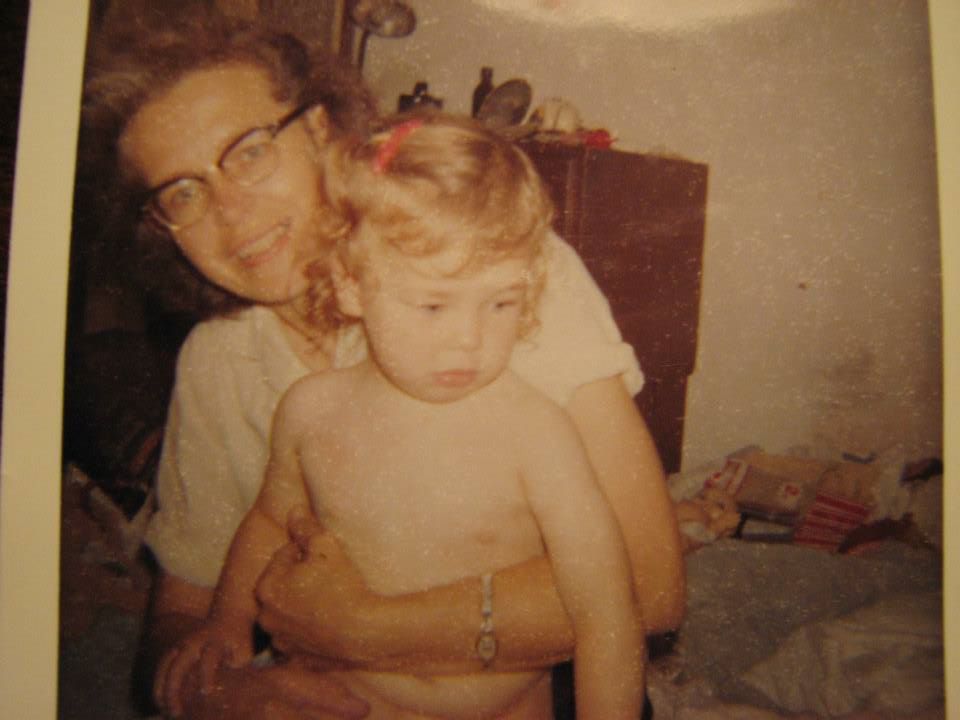
I remember some of her stories. I wish I knew more. She once told me about a local cafe, where the patrons refilled their cups by dipping them over and over into a common vat of tea. She used it as tool to teach the people about disease prevention. My grandfather wrote of a night when he saw, to his excitement, the Telstar communications satellite passing overhead in the darkness. Airstrikes during the a regional conflict in the late 1960’s forced them back to the States after 14 years away. I sometimes wonder if they would have lived there forever.
When I spent time at her house as a boy, she was always playing games with me. Scrabble, Dominoes, Chinese Checkers, and Parcheesi were a few of her favorites. We also built cabins and towns with Lincoln Logs, or made crafts out of beads. She taught me songs on the piano, and evaluated my playing. She was tough on mechanics; even if my fingers found the notes, she’d scold me when my thumb failed to roll beneath the other fingers toward the next octave. Sometimes her and I would join Clyde in the living room to work a crossword puzzle together. I remember that the linoleum tiles in front of Clyde’s favorite spot on the sofa had worn out completely, like wooden steps in an ancient church. Sometimes I wouldn’t see him for hours, and he’d enter the house in a sweat from a long walk, with a new fossil or piece of petrified wood in hand. It animated him for a time, these discoveries. As a boy from the suburbs in an era of stranger danger, I remember being amazed and more than a little nervous at the idea of walking through town for hours alone. I wish I could have joined him on one of these walks. I understand now the joy of solitary walks, and like him I’ve put footprints all over the neighborhoods and surrounding natural areas where I’ve lived.
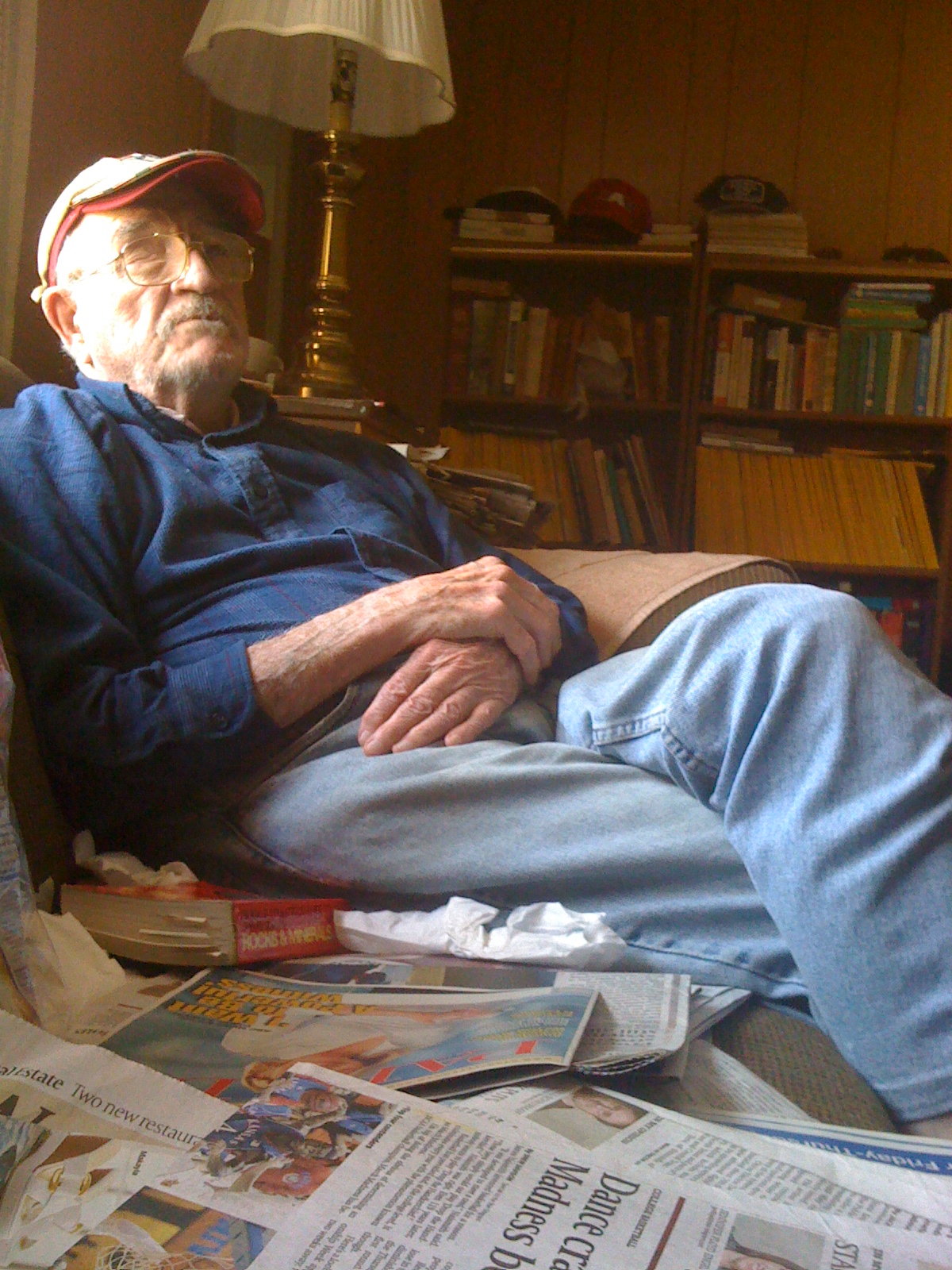
Clyde in 2010
Mary’s time in Pakistan was evident in her cooking. She used to fix me white rice with Campbell’s Cream of Chicken soup as a snack. I imagine these items were readily available to an American living in Pakistan, and I realize now that I was probably eating a staple dish from her time there. Sometimes she fixed popcorn in a popcorn making machine. She would send me to the microwave with a knob of butter to melt for flavoring. She always seasoned her chicken and other dishes with cumin, a spice that is seldom in the front of an American spice cabinet for easy reach. Aside from cumin, I remember that specific rich smell of tomato plants, and birdseed scattered everywhere in the backyard. Although I can also remember the smell of her old Honda with its cloth seats, I can’t recall the two of us going out into town together. It seems that if she left the house, it was for church on Sunday, or a major event like Christmas or Thanksgiving. Her only indulgences were from the bowl of orange candies in the kitchen, and she was the farthest thing from a consumerist. It wasn’t like her to prize a pair of shoes or a piece of jewelry. I didn’t think anything of it as a child, but I admire it so much now.
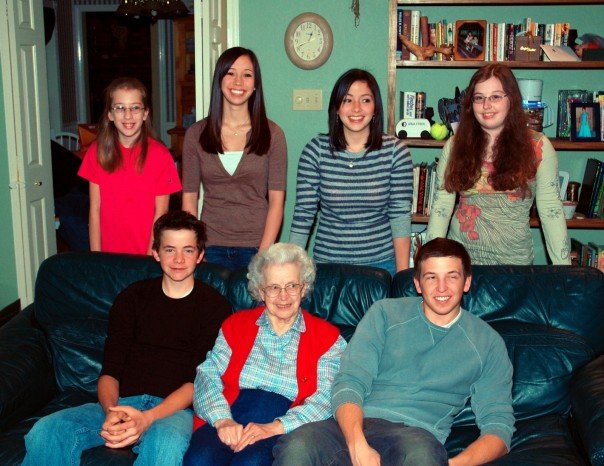
Mary, with all of her grandchildren (2007).
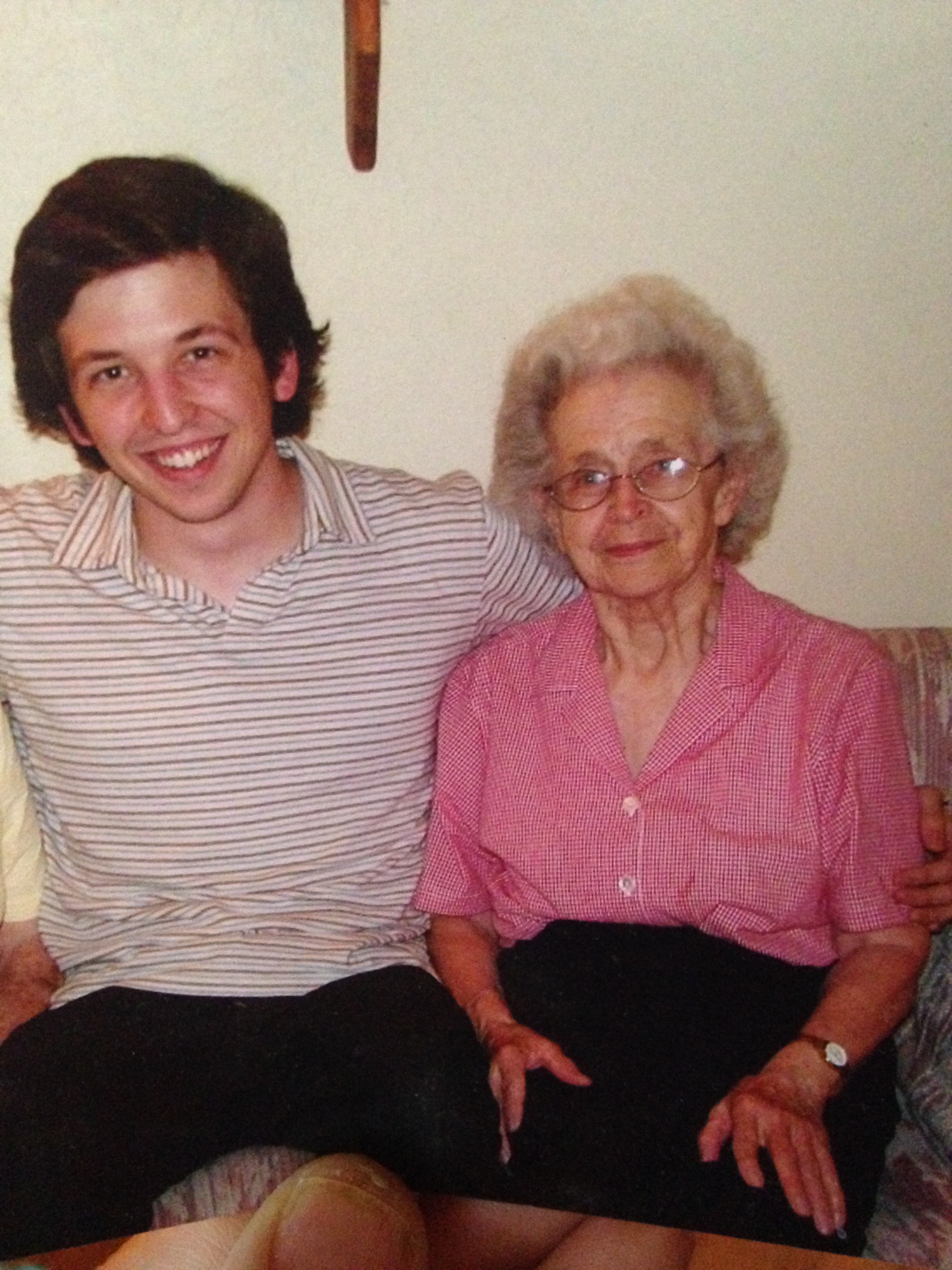
With me (2010).
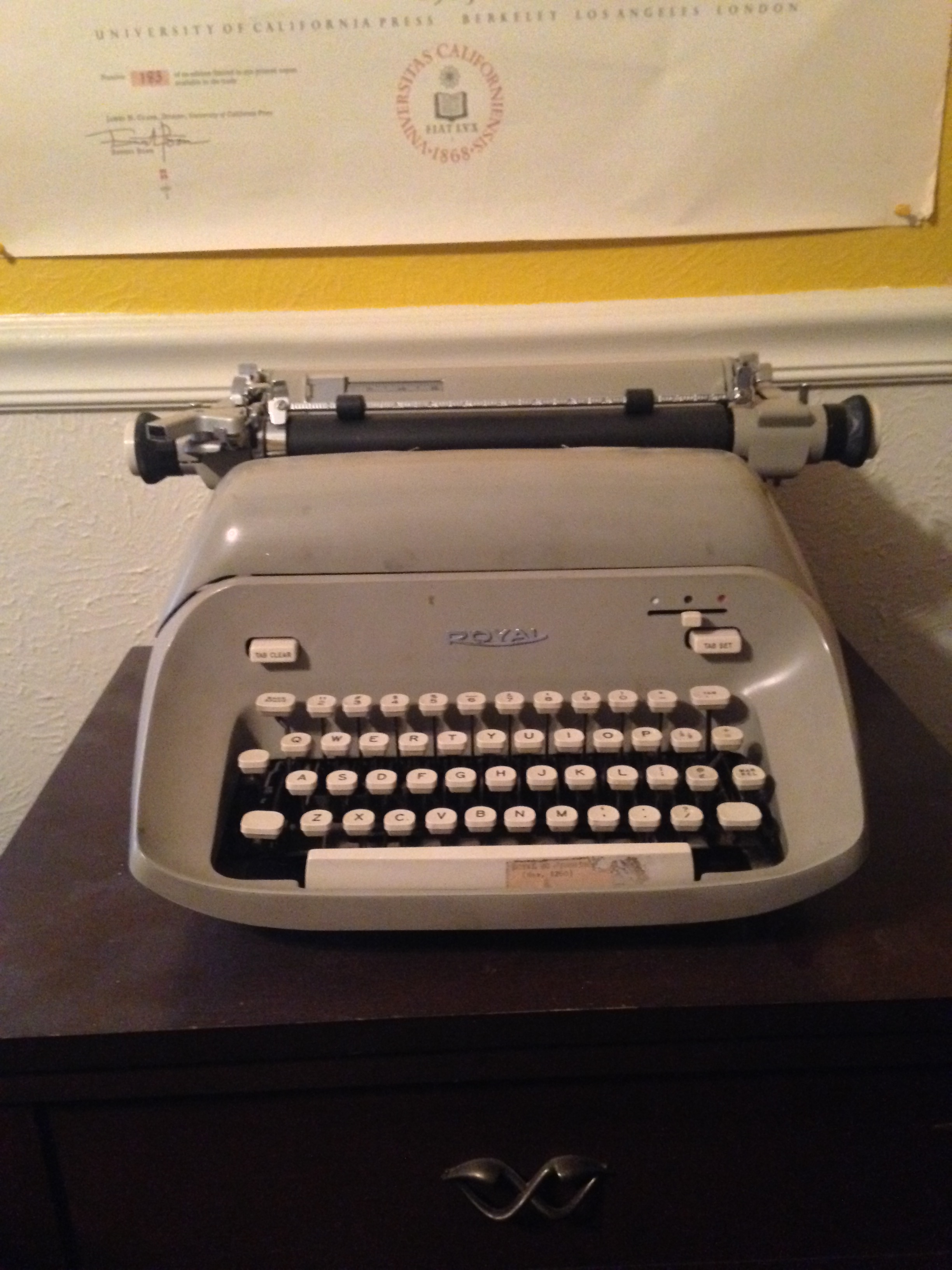
This is her typewriter. My mother brought it to Austin once during a visit, and I took it to a local shop to learn more about it. It needed a little oil, and the man who worked there really admired the model. Although her mind at that point was badly damaged by dementia, and she was hundreds of miles away, I experienced a surreal moment of connection as he demonstrated its features. I felt as if she sent a message to me from his fingers. I raced home and wrote this small tribute.
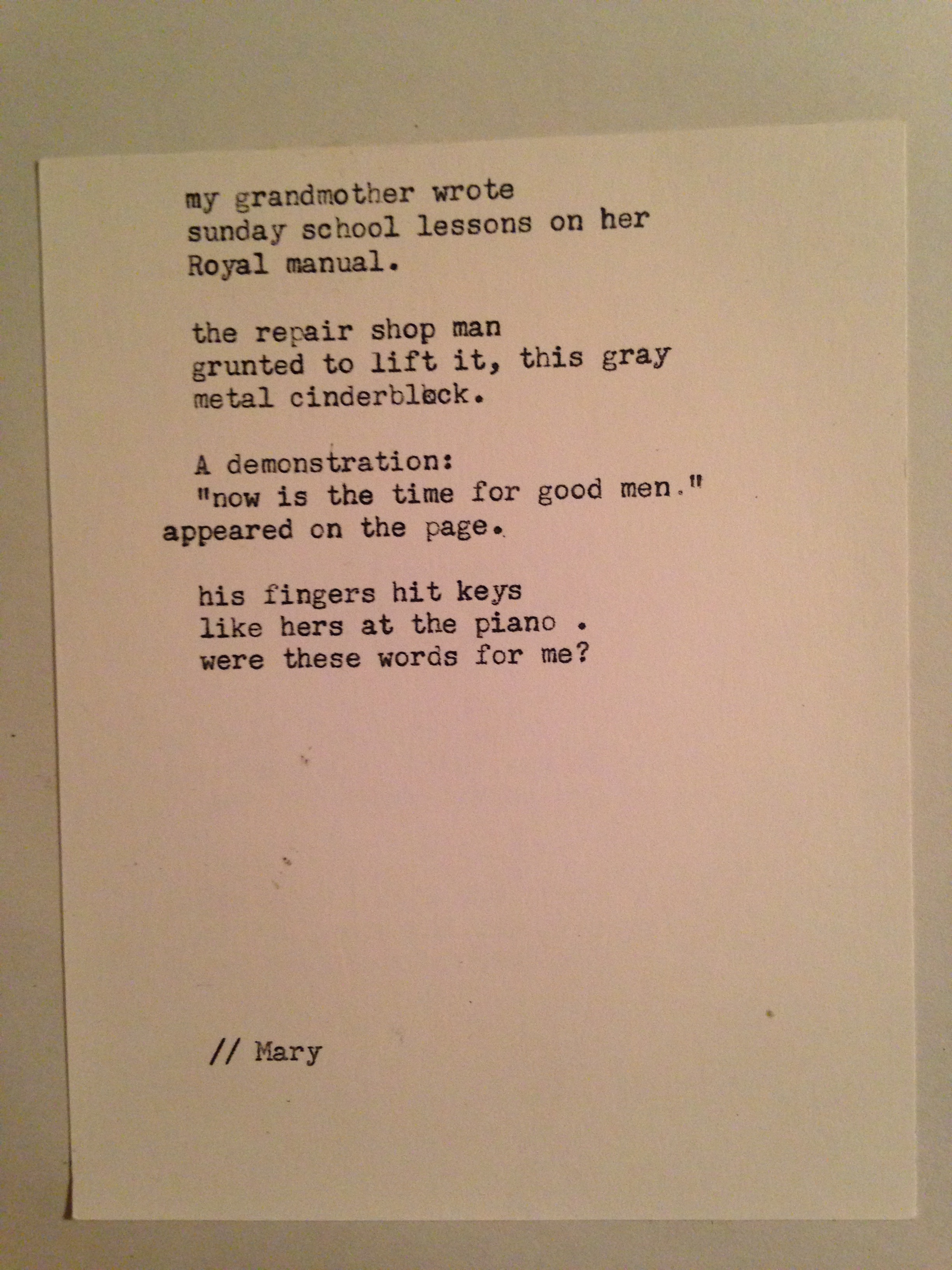
Later, I used the old Royal Manual to expand upon these lines an entire collection of haiku. I loved the physicality of the process. Typewriters require creative decisions to be made BEFORE they are typed, whereas a word processor allows for the editing and writing to happen simultaneously. It feels flimsier somehow. Typing a page is a gesture of commitment; it takes moxie to use a typewriter, moxie or ounces of white-out and the patience of Job. When I pressed the keys, it felt like I channeled her strength, the strength that sent her halfway around the world and sustained her through New York winters, civil unrest and violence in Pakistan, four rounds of childbirth, and a life of duty to God and husband. My poems never really made it into the world, but they were given to a few people in books that I stitch-bound. Although I wasn’t conscious of it at the time, now I feel sure the entire project, even the binding, was inspired by her typewriter and the dexterity of her hands.
Mary was the kindest person I’ve ever known. Never once did she gossip or say unpleasant things about other people. She loved every one, especially children, and did not expect anything in return. She knew no grudges. As an adult, I realize how hard it is to dissolve negative thoughts and to respect and honor all people, despite the way that they treat you. She is one of the few people I’ve ever met who clearly and truly had faith in God and practiced the teachings of Christ. If kindness is a quality I have, I know that it was gifted to me from her. In a capitalist society where kindness is met with suspicion, even decried as a weakness, I am proud that my grandmother was such a purposefully kind woman. I see her kindness and her love for the world as a legacy. She will be dearly missed by everyone who knew her. I wish she could have seen me grow out of the shifting and often silly phases of my youth, and talk to me today as a man. I would love so much to be inspired by her one last time. Rest in peace, Mary.
 keith fields
You must be logged in to post a comment.